
Latest News
Understanding the Difference Between Ireland’s Met Éireann Weather Warning System and the System
Weather warnings are essential tools for safeguarding lives and property by providing timely information about hazardous weather conditions. Ireland and the UK, although geographically close and subject to similar weather patterns, use different systems for weather warnings. Understanding these differences can be crucial for individuals and businesses that operate across both countries.
Ireland’s Met Éireann Weather Warning System
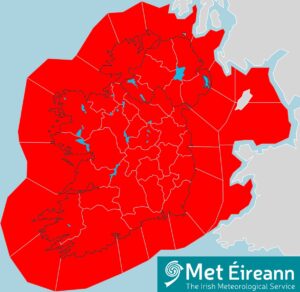
Met Éireann, the national meteorological service of Ireland, employs a colour-coded weather warning system designed to communicate the potential impact of weather events. This system uses three levels of warnings:
- Yellow Warnings
- Definition: Be aware.
- Purpose: Alerts the public to weather conditions that could cause localised disruption, such as heavy rain, strong winds, or frost.
- Example: A yellow warning for heavy rainfall might indicate the risk of localised flooding.
- Orange Warnings
- Definition: Be prepared.
- Purpose: Issued when weather conditions have the capacity to significantly impact day-to-day activities and pose risks to safety.
- Example: An orange wind warning might indicate potential damage to infrastructure and a risk to personal safety from flying debris.
- Red Warnings
- Definition: Take action.
- Purpose: The most severe warning, indicating weather conditions that pose a serious risk to life and widespread disruption.
- Example: A red warning for snow could imply impassable roads and major travel disruptions.
Met Éireann’s warnings are tailored to specific regions, ensuring that only areas at risk are alerted. These warnings are issued in collaboration with the Office of Emergency Planning and other agencies.
The UK’s Weather Warning System
The UK’s Met Office also uses a colour-coded warning system to inform the public about adverse weather. This system is slightly different, with a greater emphasis on the likelihood and impact of weather events. The warning levels are:
- Yellow Warnings
- Definition: Be aware.
- Purpose: Highlights weather that could disrupt everyday life, but the level of impact is expected to be low. These warnings are the most frequently issued.
- Example: A yellow warning for ice might indicate slippery roads and paths.
- Amber Warnings
- Definition: Be prepared.
- Purpose: Indicates an increased likelihood of severe weather that could result in significant disruption.
- Example: An amber warning for rain could mean a risk of flooding that disrupts transportation and causes property damage.
- Red Warnings
- Definition: Take action.
- Purpose: Signals exceptionally severe weather with a high likelihood of dangerous conditions and major disruption.
- Example: A red warning for heat might imply risks to health, particularly for vulnerable populations.
Key Differences
Although the systems are broadly similar, there are some notable differences:
- Terminology
- Ireland’s system uses “Yellow,” “Orange,” and “Red,” while the UK uses “Yellow,” “Amber,” and “Red.” The UK’s “Amber” warning aligns closely with Ireland’s “Orange” warning.
- Impact and Likelihood Assessment
- The UK Met Office explicitly factors both the likelihood and impact of an event into its warning system, which allows for a more nuanced assessment. For example, a yellow warning can range from low-impact, low-likelihood events to moderate-impact, high-likelihood ones.
- Met Éireann focuses primarily on the impact, with less emphasis on likelihood.
- Regional Scope
- Both systems are tailored to specific areas, but the UK’s system often provides more granular, county-level warnings.
Practical Implications
For individuals and businesses operating across both countries, it is important to:
- Understand the Thresholds: Recognise that a yellow warning in one country may not equate to the same level of risk in the other.
- Monitor Both Systems: Use reliable sources like the Met Éireann and Met Office websites or apps to stay updated.
- Plan Proactively: Adapt plans and operations based on the most severe warning for the area.
Visual Guide to Weather Warnings
Below is a simplified graphic comparing the two systems:
| Warning Level | Met Éireann (Ireland) | Met Office (UK) |
|---|---|---|
| Yellow | Be aware | Be aware |
| Orange | Be prepared | Amber: Be prepared |
| Red | Take action | Take action |
(Add an image/graphic here showing the comparison visually. Include colour-coded maps or charts to highlight warning levels.)
Conclusion
Understanding the differences between Met Éireann’s and the UK Met Office’s weather warning systems is essential for staying safe and informed. Both systems are designed to protect lives and property, but recognising their nuances ensures better preparation for adverse weather, whether you’re in Ireland or the UK.
